
KEY TAKEAWAYS
To check in poker means to pass the action to the next player without placing a bet, while keeping your cards and staying in the hand. A check costs nothing, and it is allowed only when no player has bet yet in the current betting round. Think of it as betting zero: you decline to put chips in the pot, but you do not give up your hand.
The word comes up in almost every hand, so a beginner hears it constantly at a live table and sees a “Check” button online. This guide explains what check means, exactly when a player is allowed to check, what happens after a check, and the related terms that use the same word, such as check behind, check-raise and check/fold. Short examples with real cards and chip amounts show how it works in a hand of Texas Hold’em.
What Check Means in Poker
Poker has a small set of betting actions: check, bet, call, raise and fold. A check is the action of passing without betting. The player stays in the hand, keeps both hole cards and puts no chips into the pot. The turn to act simply moves to the next player on the left.
A check is different from a fold. A player who folds gives up the hand and the chips already in the pot. A player who checks stays in the hand for free and still has a chance to win the pot. It is also different from a call, because a call means matching a bet that someone has already made, which costs chips. A check is only possible when there is no bet to match.
The idea behind the rule is simple. A betting round has a “price” to stay in, and the price starts at zero. If no one has bet, the price is zero, so a player may stay in without paying. Once a player bets, the price is no longer zero, and every other player must pay it or leave the hand.
In this sense, a check keeps a player’s betting rights for the time being. Others may bet after the check, and the action will then come back to the player who checked, who still has the choice to call, raise or fold.
When You Can Check and How It Works
The one condition: no bet to match
The rule is the same in every standard poker game: you may check only if no one has bet in the current betting round. After the flop, the turn and the river, the first player to act may check or bet. If that player checks, the next player has the same two choices, and so on around the table.
Before the flop
Before the flop, the big blind counts as a bet, so most players cannot check. They must call the big blind, raise or fold. The exception is the big blind player, who has already posted that bet. If everyone else only calls and nobody raises, the big blind may check, which is often called “taking the option,” and the hand moves on to the flop.
How a check is made
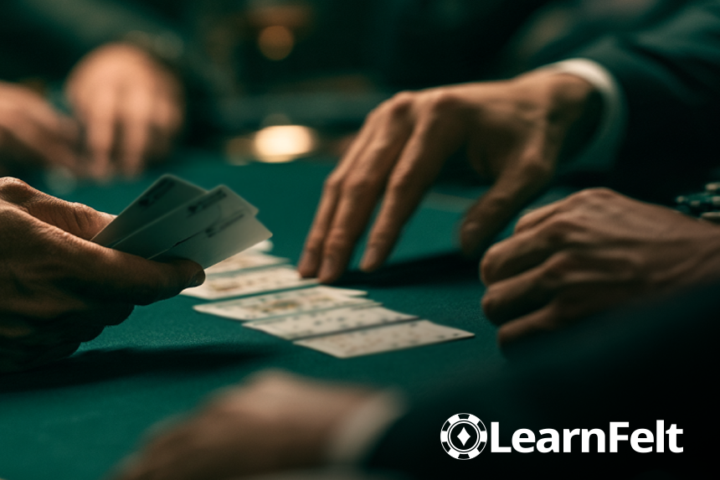
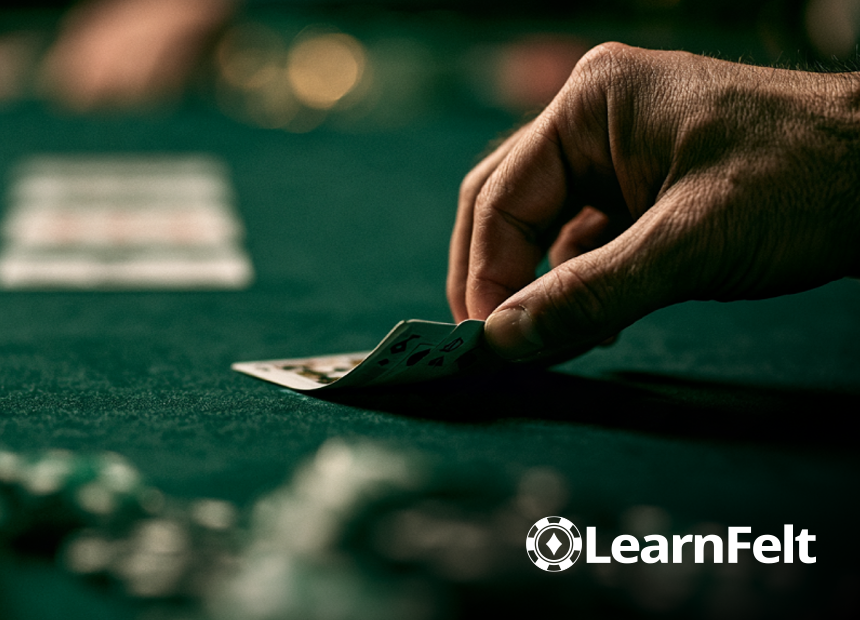
In a live game, a player checks by saying “check” or by tapping the table. Tapping the table is the common signal, but a clear spoken word is the safest, because it leaves no doubt. Online, a “Check” button appears only when checking is allowed. Some online sites also offer a “check/fold” button, which checks if no bet is made and folds if a bet is made.
What happens next
If every player still in the hand checks, the betting round ends with no chips added, and the dealer moves on to the next card. If someone bets after a check, the action returns to the player who checked. That player can no longer check. The choices are fold, call or raise. If all players check on the final round, the hand goes to a showdown, where the cards are shown and the best five-card hand wins.
Example: Checking in a Hand of Hold’em
Suppose the blinds are 50 and 100 in a Texas Hold’em game with three players: Ana, Ben and Cy. Ana is in the small blind, Ben is in the big blind and Cy is on the button. Cy calls 100, Ana calls 50 more to match, and Ben has the option. Nobody raised, so Ben checks his option by tapping the table, and the flop is dealt: K♠ 8♥ 3♣.
Ana acts first after the flop. No one has bet, so she may check, and she does. Ben also checks. Cy now has two choices, check or bet. He bets 200. The action returns to Ana. Her earlier check does not give her the right to check again, since there is now a bet to match. She can fold, call 200 or raise. She calls. Ben folds.
Now take a different version of the hand. Cy also checks on the flop, so all three players check and the betting round ends with no extra chips. The dealer burns a card and deals the turn. A round of checks like this is called “checking it around.” Either way, a check adds no chips unless somebody bets after it. The next street, covered in turn and river in poker, follows the same rule.
Terms That Use the Word Check
Beginners hear several phrases built around the word, and each phrase has a specific meaning at the table. Knowing them helps a player follow the conversation.
Check behind means checking when the action reaches you and everyone before you has also checked. The word “behind” refers to a player who acts after the others. The player on the button, who acts last after the flop, often “checks behind,” which ends the betting round. This term is easier to follow once the seat names are clear, as explained in poker position names.
Check-raise means checking first and then raising after an opponent bets. Suppose Ana checks, Ben bets 200 and Ana then raises to 600. That is a check-raise. It is legal in most games, including standard Hold’em, though a few home games ban it, so asking the host is wise. The size of that raise follows the usual rule, explained in the minimum raise in poker. Check-raise is a legal move, not a trick or a rule violation, in standard rules.
Check/fold means a player plans to check if possible and fold if somebody bets. Checking it around means every player checks and the round ends.
Common Beginner Mistakes About Checking
The first mistake is trying to check when a bet is on the table. If a player has bet, “check” is not an option. A beginner who taps the table in that situation may be told it is not valid, and the dealer will say what the choices are: fold, call or raise.
The second mistake is thinking a check means the player is weak. A check only means the player chose not to bet at that moment. Players check for many reasons, and a beginner should not read meaning into a single check. Reading opponents is a skill that comes much later.
A third mistake is confusing check and call. Check costs nothing and is available only when there is no bet, while call means paying to match a bet. Another common error is acting out of turn. Saying “check” before the previous player has acted can cause confusion, and the rules about out-of-turn actions vary by cardroom, so it is better to wait. Finally, beginners sometimes think that after everyone checks, the hand is over. It is not. The next card is dealt, or, on the last round, the showdown takes place.
What This Means When You Sit Down to Play
At a live table, the best habit is to say “check” out loud and tap the table when it is your turn and no one has bet. The dealer will then move the action to the next player. Waiting for your turn matters, because a check made too early may count or may be ignored, depending on the cardroom.
Online, the buttons change according to the situation. When a bet is made, the “Check” button disappears and a “Call” button replaces it, which is a good way for a beginner to learn the rule. Poker involves real financial risk, and short-term results involve luck, so setting a budget before playing is a sensible habit. The legal age and rules for real-money poker also vary by state and venue.
What to Learn After Check
Once check makes sense, the other betting actions are the natural next step, and the full order of play shows where each one fits. How to play Texas Hold’em walks through each betting round from the blinds to the showdown. Learning the five betting actions together makes every hand easier to follow.
Frequently Asked Questions